One picture, many soundtracks: making the Salvor explainer
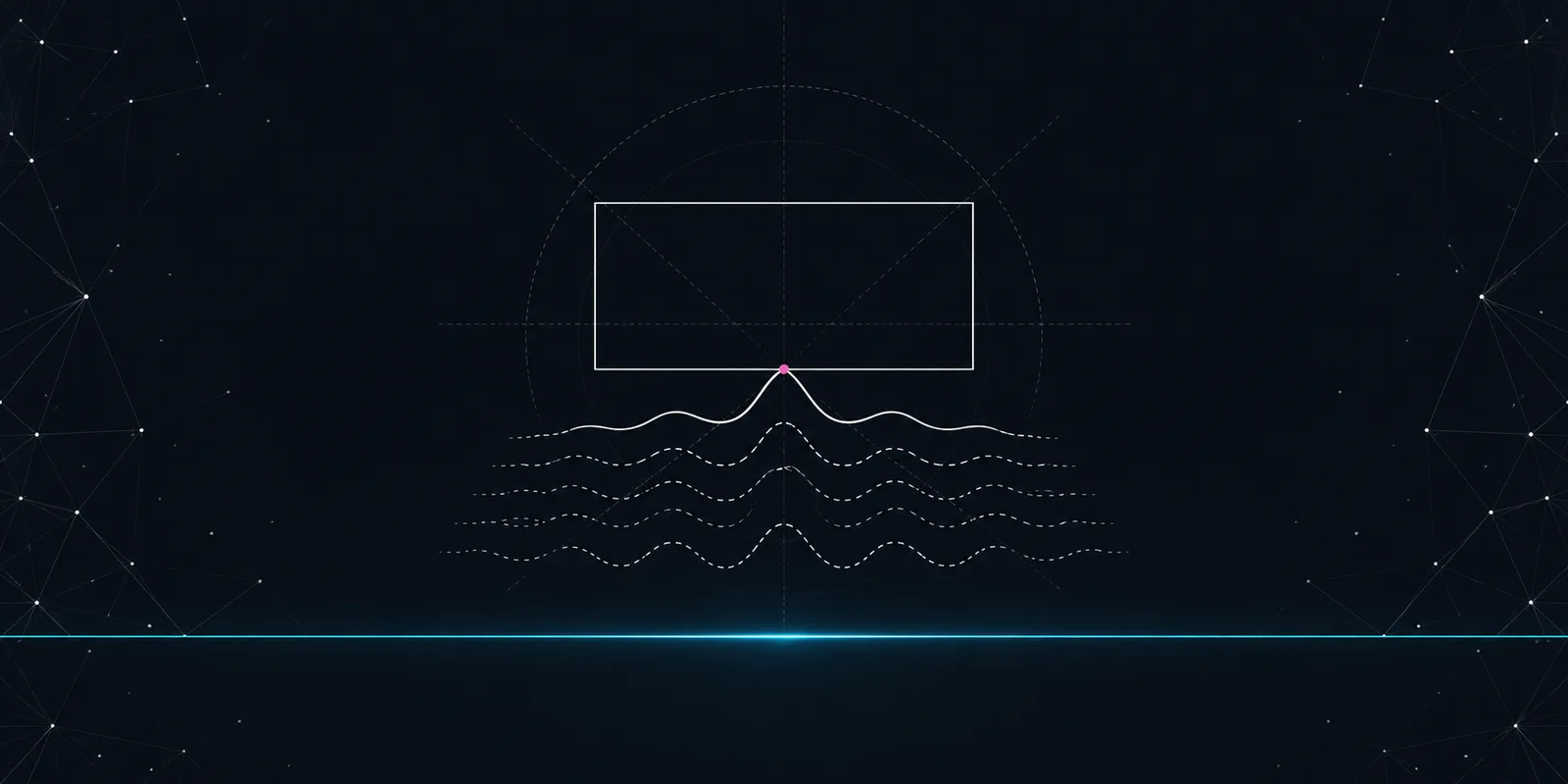
I wanted a short, honest film that explains Salvor to people who don't write code. The picture took one round. The sound took the rest of the evening: three AI models made, fixed and measured more than ten soundtrack versions, and every verdict on how it sounded came from me.
The picture: drawn once
The brief to Codex was clear about what the film should not be: no ad, no hype, no made-up numbers, no prices or tokens, no shouting call to action. Every fact had to come from Salvor's README, and the film had to work without sound on a phone.
Codex wrote the whole film as one HTML page with its own SVG drawings and CSS. Ten short scenes carry the idea: "Git preserves what changed." "But why this way?" "New AI session. Missing context." Then Salvor: a folder that keeps decisions, failures, lessons and deferred findings, reviewed by humans, kept in the repository, picked up by fresh sessions. It ends on the Salvor wordmark and "Open source. MIT."
Codex asked Grok for a critique of the concept and took some of it: a visible picture of lost context, a check mark for human approval, records travelling into a new session. Codex's sandbox cannot run a browser, so Claude opened the page in Chromium, captured all 1,200 frames and turned them into a silent 40-second MP4. That picture never changed again.
The sound: rebuilt again and again
My first reaction to the silent film was "is there no sound?" Here is what followed, version by version, with my verdict after each one.
- A calm original score (Codex). Procedurally generated, warm and quiet, built to follow the storyboard. Then I asked for more: "more professional and engaging, every detail should be noticed; get Grok's help, the three of you discuss it."
- Sound design for every event (Grok, Claude, Codex). Grok proposed a 92 BPM pulse but guessed the event times. Claude took the real times out of the animation code, so every sound lands within one frame of its picture. Codex built 41 cues: dots, checks, the question mark, the broken line, four paper landings, the approval chime, the logo. My verdict: "The transitions are well timed. But the background music is silly. It does not fit AI agents. You yourselves must like it first."
- Three new scores (Codex). Codex wrote three different 40-second tech-film scores, rejected all three on its own measurements and refined one. It also said plainly that it cannot listen, so "you must like it first" was a promise it could not keep.
- A real track. I picked "The Borderland" by Eugene Myers from Pixabay. Claude placed its big drop exactly on the moment Salvor appears at 11 seconds. Then I played it on my phone and heard nothing.
- The silent phone. The file did have sound: its decoded audio measured −15.86 dBFS. Codex could not prove why the phone stayed quiet, and it said so instead of guessing. It packaged the next files for the widest phone compatibility (44.1 kHz AAC, audio marked as default, no edit list, both streams starting at zero) and proved the sound was there by decoding every file back.
- Two AI-generated tracks. Claude made two cinematic tracks with vidIQ's music tool. Codex fitted both: the drop within about 10 ms of 11 seconds, a closing accent on the logo at 36 seconds, a real ending instead of a fade. It also wrote an honest comparison: the second track carried 68% of its energy below 120 Hz, against 40% for The Borderland. Its verdict: heavier and possibly less clear on small speakers, but structurally usable.
Epic 2: three small fixes
That second track, "Epic 2", is the one I liked. From here on my notes were short, and Codex changed only what each note named.
- "Only the intro is not good. The rest is beautiful." Codex measured the opening and found it thin and uneven: two very sparse seconds at the start, then a dip in energy just before the drop. It built a new intro from the track's own main theme, filtered so it slowly opens up, and proved that everything from 11 seconds to the end stayed sample-for-sample identical to the version I liked. The largest difference was 0.0.
- "Remove the paper and tick sounds, and start from second 5." This one surprised me about my own taste. The carefully timed sound design from the second round was what I now wanted gone. Codex removed 31 of the 41 cues and kept only 10 soft "air" sounds under the captions. Because my note could be read two ways, it made two versions: the full 40-second picture with the music moved forward by five seconds, and a 35-second cut.
- "Quieter for the first five seconds, then louder, then softer towards the end." Codex lowered the opening by 6 dB, raised it on a smooth curve into the drop, held the middle near −14 LUFS and faded the last eight seconds without losing the logo accent.
The 40-second version of that third step is the one I posted on X. From the silent picture to the final mix took less than five hours.
What the measurements could and could not do
None of the three models can hear. Every round was checked with numbers taken from the finished file: loudness, peak level, energy per second, energy per frequency band, timing against the picture, identical frames, no silent gaps. Those checks caught real problems, such as a first encode whose peak went over the limit, and they made sure every version actually had sound.
They could not tell whether the music fit the film. Every turn in the list above, from "silly" to "only the intro" to "remove the ticks", was a listening judgement. The models were honest about this: almost every report ends with a line like "subjective listening approval remains outstanding".
What I took from it
- Lock the picture early. Because the picture never changed, every sound version could be compared fairly, and the picture's code gave exact times for every sound.
- Narrow notes get precise fixes. "Only the intro" let Codex rebuild 11 seconds and prove the other 29 were untouched. A vague "make it better" would have risked the part I liked.
- Effort is not taste. Forty-one carefully synced effects were a real piece of engineering, and in the end most of them came out. That was the right call for the film.
- Test on the device people will use. The silent-phone moment showed that a file which measures fine can still fail where it matters.
- Let the models say "I don't know". Codex never pretended to know why the phone was silent or whether the music was good. That made its measurements easier to trust.
The film explains Salvor, the repository memory layer I use in my projects. Its source is open on GitHub. The music in the final version is an AI-generated track made with vidIQ; the picture is Codex's own drawing.
Get new articles by email
Only when a new article is out. No ads. Details →